

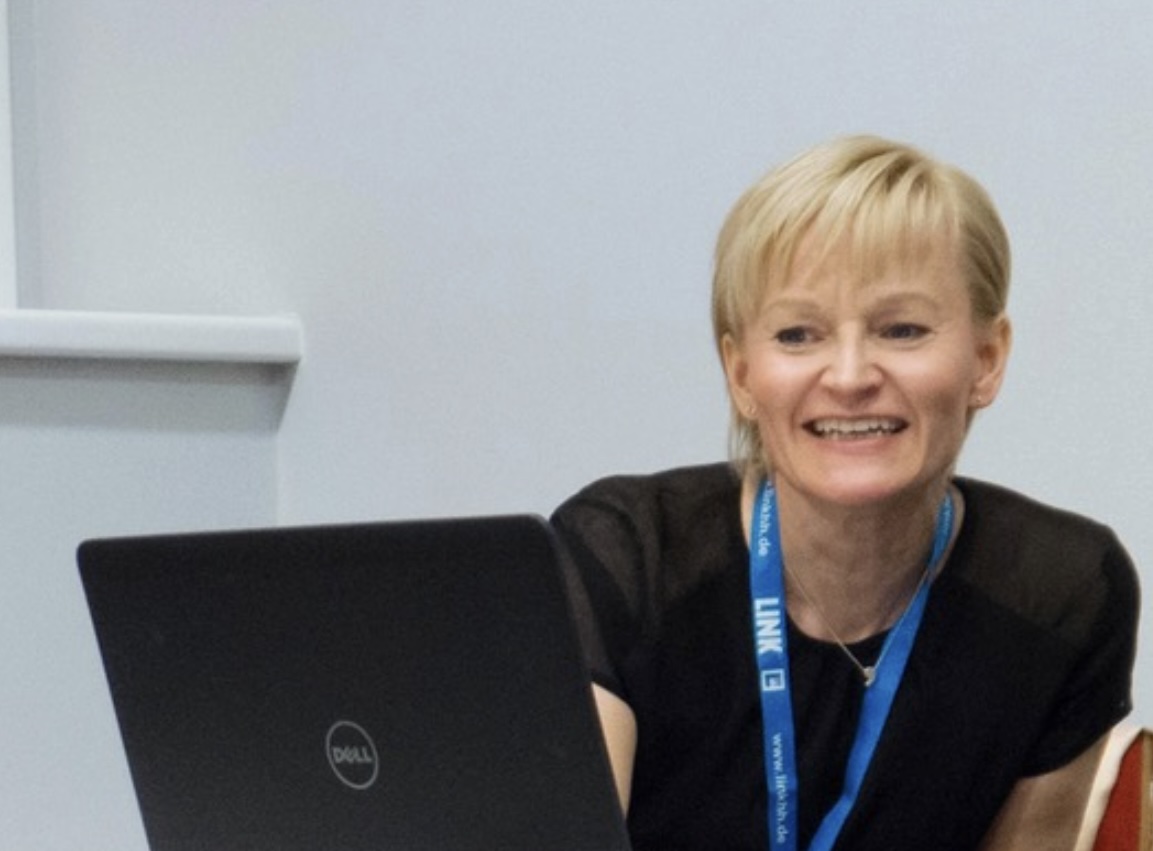
Pirjo Toivonen holds a unique position in FICEBO, and has modestly and without fanfare, been an essential contributor to FICEBO’s incredible success for the last two decades.
I asked to interview her by zoom and started out by asking her: what exactly does she do at FICEBO?
She didn’t skip a beat and smiled widely: “If the thing doesn’t belong to anyone, then it belongs to me." She is, of course, referring to her role as a research coordinator, but also a master-of-all-trades manager who is able to coordinate a thousand different moving parts in order to make very complicated research projects happen. She juggles staff, procedures, patient contacts, data collection, and all the associated paraphernalia and bureaucracy that is involved in the foundation of a research program. She does it with a smile and a bit of pride. She knows what she’s doing.
I began to really relate to her position, realizing, hey, I did that kind of work in my early days of doing drug policy research. I once was the guy who had to juggle the bureaucratic demands of the Ministry of Health, the rules and requirements of the University, as well as the egos of highly qualified clinicians, to carry out research that was closely monitored by the requirements of the research funder. It’s not an easy job, and I think Pirjo does what a good research coordinator must do: juggle twenty things, while pedalling a unicycle across a tightrope.
Based in Tampere, she works as a research manager for the FICEBO-group and, with Teppo, is one of its founders. She is connected both with the University of Helsinki and the Helsinki University Hospital. Over the last two decades her job has been to navigate a variety of bureaucratic worlds, re-organizations, and priorities. As both a physiotherapist and a research coordinator she has been instrumental in seeing the flagship FIDELITY and FIMAGE trials to fruition, not to mention advising on the administration and management of most of the other FICEBO trials.
Right up front I had to ask her the one BIG question looming in my mind, and the one which everyone asks me when I try to describe this thing that seems like a weird and foreign creature: A modern, randomized sham-surgery trial.
“How do you get people to volunteer for trials like that?”
Pirjo doesn’t flinch and her answer is clear and direct: “We’re honest.” She explains further with the kind of frankness and humility that I now associate with Finnish people. “We just do what’s needed to be done. We are upfront about what is happening and we hold no secrets.” This form of transparency is refreshing and no-doubt leads to the high level of trust that FICEBO is able to engender when it comes to asking people to join a new trial.
“It’s about telling people exactly what we are hoping to do and inviting them to be part of a process that can help reduce uncertainty when it comes to orthopaedic procedures.”
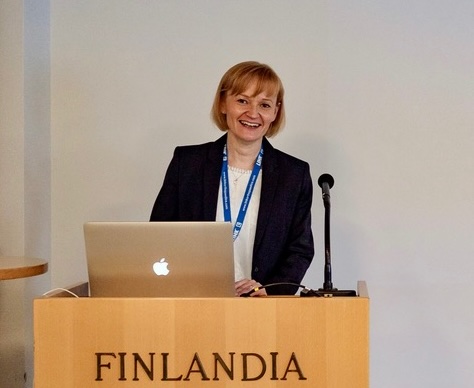
She has not just a professional interest in the challenge of recruiting patients for FICEBO trials, but she has a strong educational investment in this issue as well, having completed a Bachelor’s degree examining recruiting issues around randomized sham surgery trials. And she’s now also working on a master’s degree.
In the course of my conversation with Pirjo, I realized why her role in FICEBO is so crucial: In order to achieve success in this kind of research, the human connections between researchers, surgeons, and research staff are vital. To keep everything moving seamlessly requires dedicated, and focused management, all of which are essential parts of the DNA of a FICEBO trial. The connections between researchers and patients who are recruited are built on trust. When that trust is high and the relationships are well-managed, the patients are not only more likely to join the study but also stay with it. The proof is in the pudding. The legendary longevity of follow-up with several FICEBO studies, which is both unique and vital to our long-term understanding of the effects of orthopaedic procedures, really comes to down to managing relationships. Back to Pirjo.
Managing the burden of patient enrolment, at least initially, has largely fallen on Pirjo’s shoulders and she has become the team's memory bank on what works and what doesn't in patient enrolment. Enrolling and keeping track of patients can be tricky business, but FICEBO's track record in impressive long term follow up is remarkable.
I asked her to explain what she thinks is happening.
“It’s about good connections, effective teamwork and treating patients with respect, openness and transparency,” she said, “that’s why after ten years we can still maintain contact with patients and keep them involved in our studies.”
“We are lucky, and we are focused on quality.” Clearly I can see that Pirjo has very high standards. She knows that how patients feel about their participation is vital part of getting the job done. In the final and most definitive word on this topic she adds, “the patients must be heard.”


Stay up to date
Follow FICEBO on social media to stay in the loop with our latest updates.
