
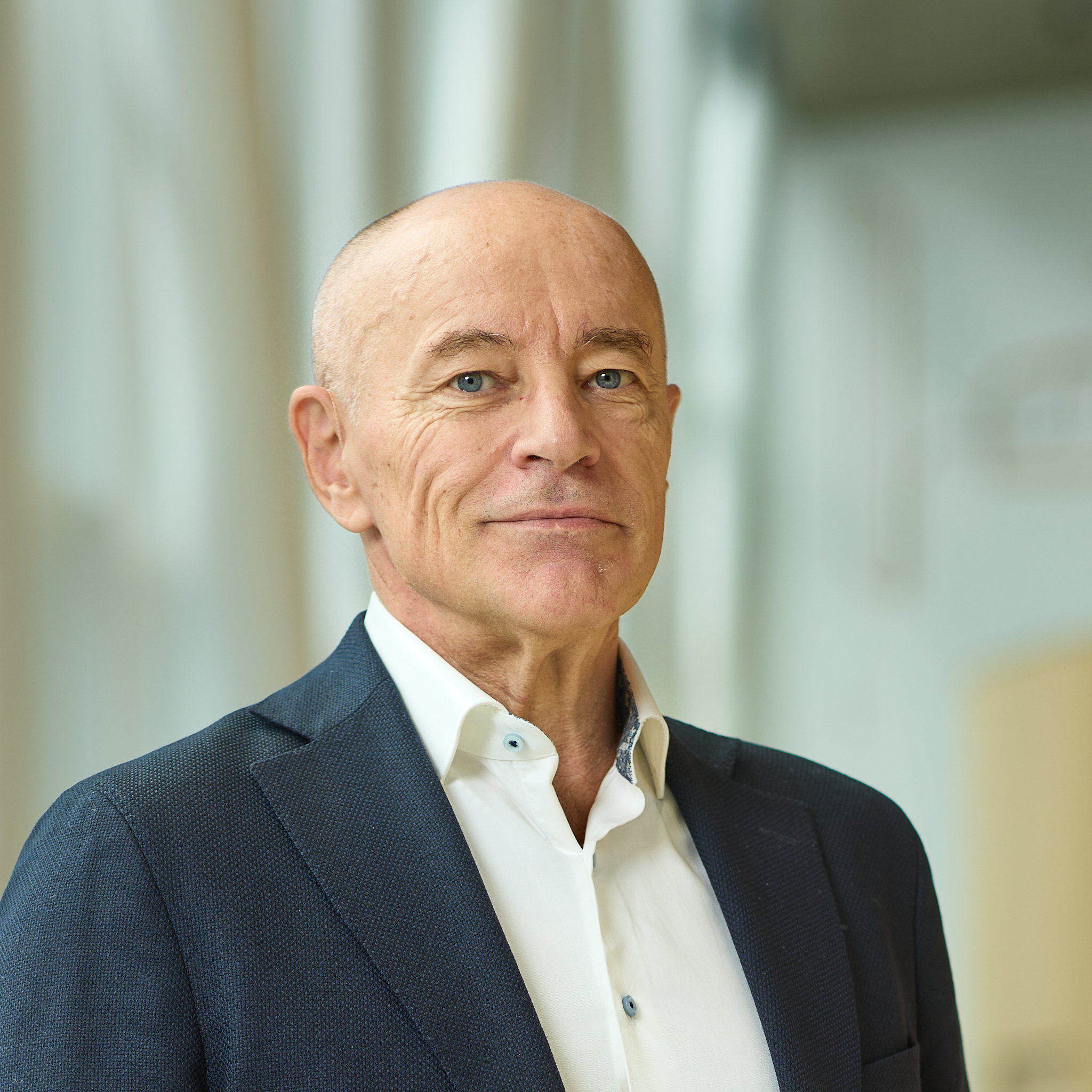

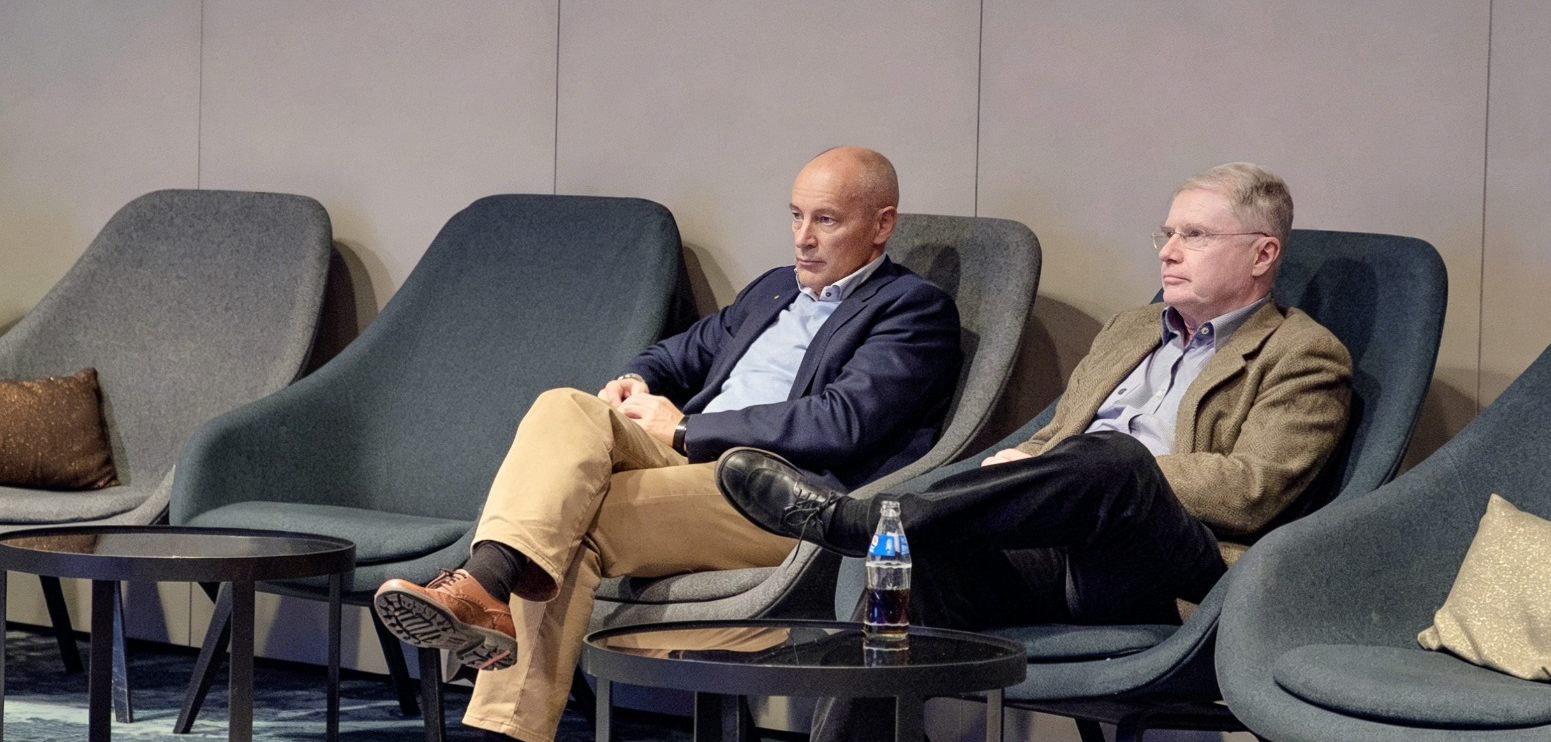
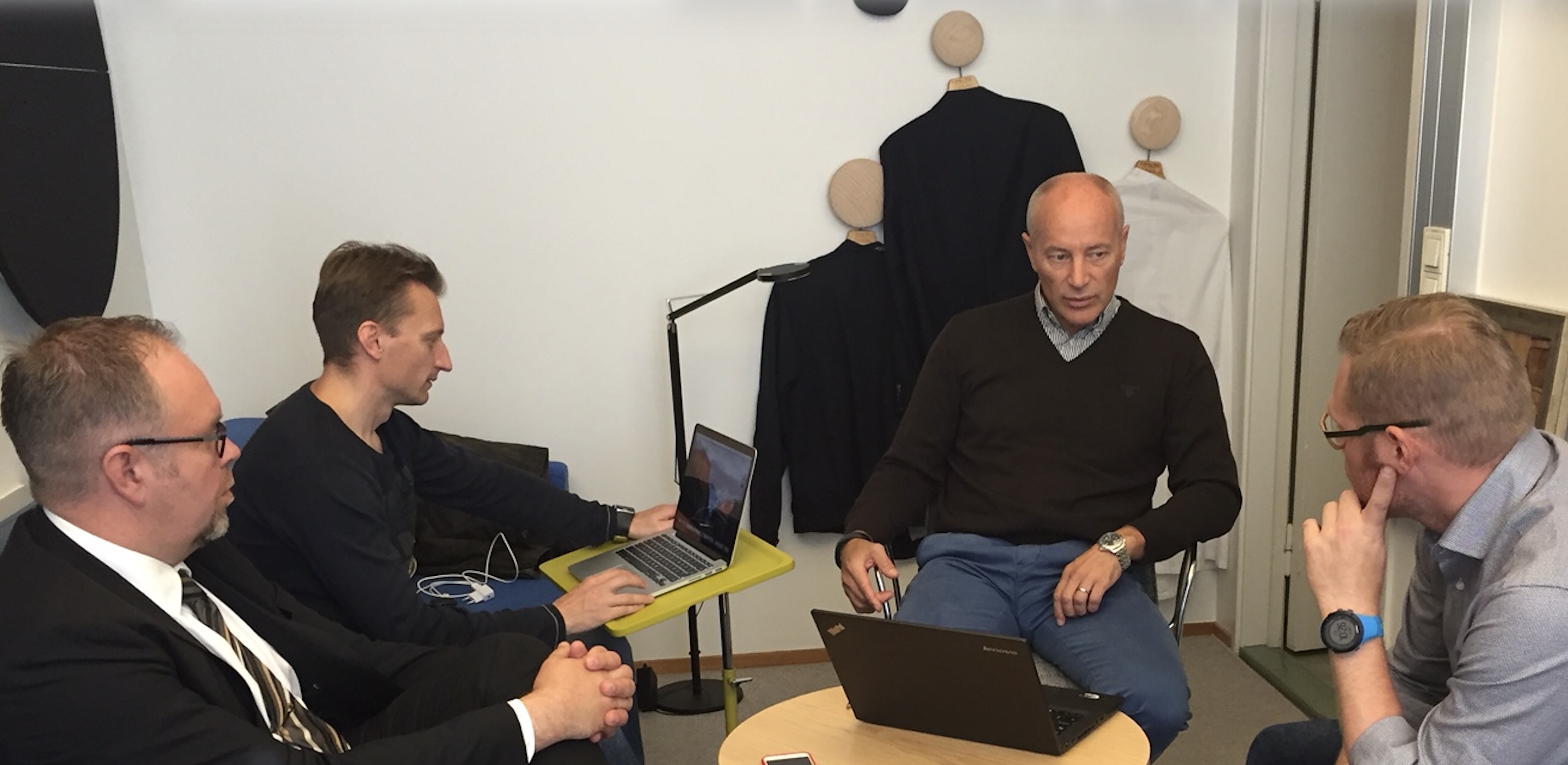
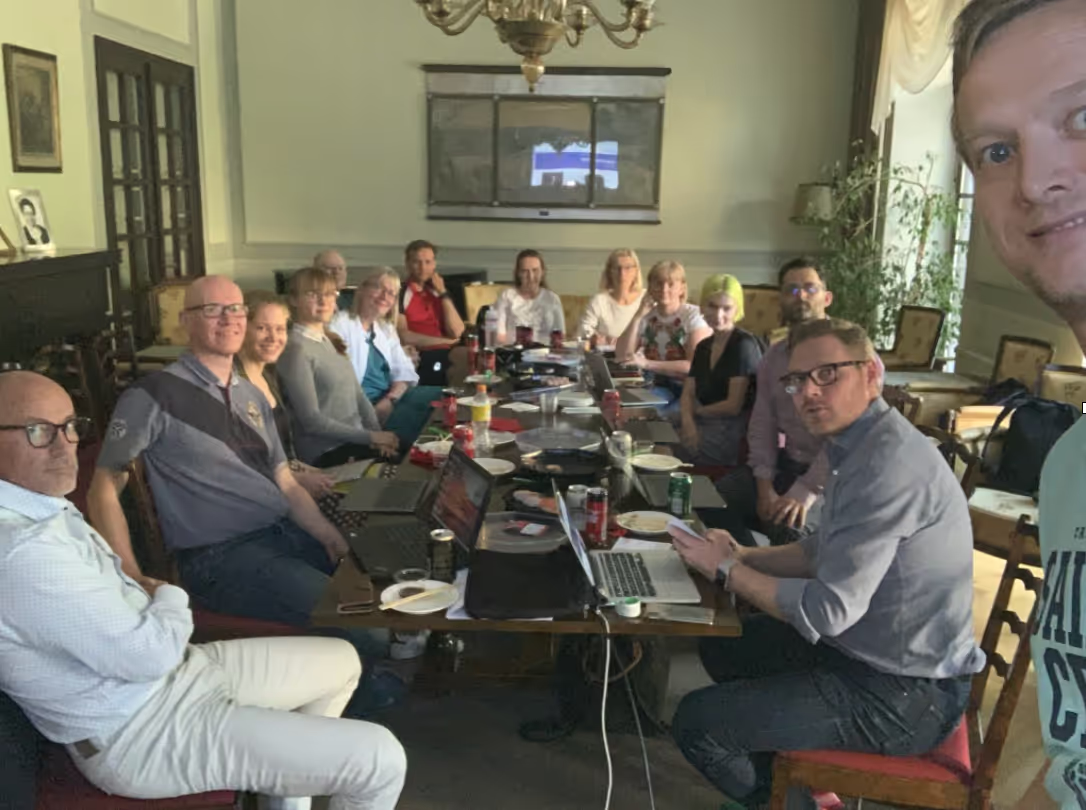
In header picture: (from left to right) Simo Taimela and Antti Malmivaara at a FIMPACT meeting.
By Alan Cassels
(this article has been condensed from an interview with Simo on March 19, 2026)
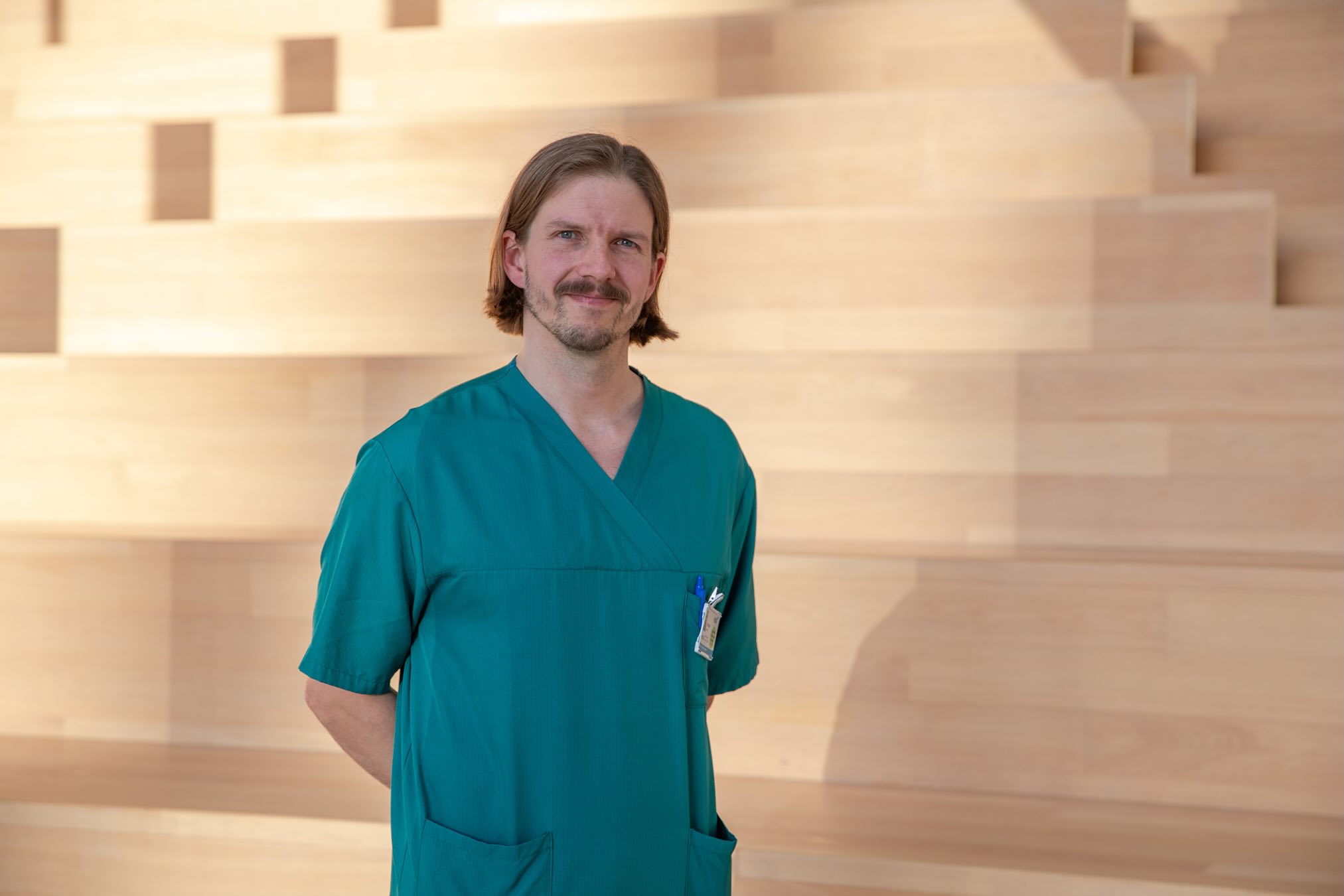
Simo Taimela is FICEBO's Research Director who has had a long career, spanning multiple FICEBO projects. He is the Principal Investigator with the FIMAGE study and has deep insights into the challenges of developing new research projects and trials and keeping up the momentum to see them through.
We began with Simo sketching out his background, telling me he stopped doing daily clinical practice over 30 years ago (in 1994). He's mostly working in the area where his passion lies, as an epidemiologist.
Like many of the FICEBO trials, testing commonly performed orthopaedic surgeries against placebo controls is vital to determine whether there is sufficient evidence of benefit. Of course, designing such trials requires heavy-duty experimental epidemiology, which is the subject that gets Simo fired up.
His first FICEBO trial was with FIMPACT, assessing whether arthroscopic subacromial decompression (ASD) was more effective than diagnostic arthroscopy alone in improving pain and function in patients with subacromial shoulder pain. He later joined FICEBO's flagship trial, the FIDELITY about 10 years ago.
His eyes twinkle as he explains the different types of epidemiology.
He said: "We can do descriptive epidemiology, where we are trying to understand "who" and "where". Then there is the second type, the epidemiology that focuses on examining risk factors and causal factors. But then there is the 3rd theme --experimental epidemiology, where we are trying to affect the course of the disease. That's mostly what I am doing."
He adds: "I have done some descriptive, and some risk factor studies. But my main interest is in how we can intervene, what can be done? What is effective?" For this role, he's been engaged right from the beginning in designing many of FICEBO's randomized studies.
What does that involve? I wondered...
He said: "There are lots of methodological issues that have be dealt with. We have to establish the rigour, the internal validity, like the reliability of the measures. Then there is the external validity, which determines the generalizability, or the applicability of the results. That forms the framework to set up what measurements we will use."
He describes further: "There are always lots of questions. At the start, we always ask: What is the research question? What are the knowledge gaps? What are we trying to answer? What kind of population are we dealing with? And then: what kind of methods, measurements, and interventions Will we use? What are the contrasts, if we are building a comparative study? If we are doing an RCT, how do we do the randomization? How do we ensure the patients are comparable, and is the blinding solid and so on?" These are complicated, often enigmatic questions that the team has to figure out, aided greatly from having completed other studies.
Simo said: "Yes, we have lots of experience, but we also learn from success and errors. We learn things so that future mishaps can be avoided."
I said I thought the key to success of FICEBO trials is largely due to the high degree of trust in the Finnish system.
He says it's deeper than that. "Yes, the Finnish system has a high level of trust, but we must acknowledge that overtime the trust is weakening. When surveys, such as Health 2000 were done, the response rate was very high, in the 70-90s, but it has been declining ever since. You also need to have very good research coordinators, and research nurses and investigators who know what they are doing." He added, lucky for us, "we have a tremendous network of skilled people who know what they are doing."
What gets you excited?
"I really like to understand something new, to figure out something that wasn't known before. Something novel that will really matter."
He provides an example: FIMAGE
This is a population based, longitudinal observational study aiming to produce novel data on the epidemiology and diagnostics of shoulder disorders.
Simo said: "We have been building the FIMAGE study for many years. But at first, it was incredibly difficult to find funding. The project was investigator-instigated. And we needed a big budget, of about seven figures. There were many issues with designing it, obtaining the permission of all the parties involved and soon. We needed a sample of 600 people--as a population-based sample. We had to run 1200 MRIs and X-rays in each arm. It was a lot of work building the logistics."
Luckily the project pushed on and was successful. Results were published earlier this year in JAMA Internal Medicine. I asked Simo to expand on what they found:
Well, It was quite surprising as 99% of individuals over 40 years have a pathology in their rotator cuffs." He adds: "I probably have something in both of my shoulders; I don't care, as long as I can play tennis or golf."
"Everyone has anomalies. At our age you have nearly 100% chance of finding pathology in your spine, in your knees, in your shoulders, and so on."
"Basically, our definition of what is "pathologic" is failing if we rely solely on imaging." In his mind this is the heart of the stuff he likes: that which is complex, and novel.
What are, I wonder, the implications of the FIMAGE trial?
"It has been determined from Thomas Ibounig's interviews that we shouldn't define pathologies based on imaging. Our knowledge of what is a disease and what isn't a disease is limited. The predictive value of an image alone is very poor. There is probably very little benefit."
Has there been any policy changes based on FIMAGE?
"No, FIMAGE hasn't changed the world yet. It is far too early. We hope more and more people will pick up this theme and study it as well."
"It comes down to the word 'Pathological'-there has to be something wrong with the current paradigm. We know that there are many other things that are highly prevalent in 'normal' shoulders."
I said there are clearly huge implications for this research given the billions around the world that is currently spent on imaging as a diagnostic tool.
He agreed: "The general population is used to the idea of an MRI. If there is trauma that's probably right. But we're dealing with degenerative conditions because they are so common. You shouldn't rely solely in the imaging because the degenerative conditions are so common. "
How does this affect how you treat if the image doesn't give you good information?
"The thinking should be reversed: you need the imaging to rule out severe diseases," said Simo. "And if and when you know there aren't any severe conditions, such as cancer, then you treat the symptoms. "
"For example, --controlling pain if that's it. You should use exercise-based approaches to build up function that is probably lost. People are fearful, if you have pain then you move less, then you lose your muscle, your coordination, and so on. You need to rebuild that." I asked his thoughts on FICEBO's past and future: What are the milestones in the past of which he is most proud?
Simo doesn't hesitate to tell me what he likes most: being a supervisor and a mentor.
Simo said: "There are certain papers I'm proud of. But the most important milestones have been the PhD students along the way. It's a pleasure to give (to be a mentor), to help other people to learn, to grow."
He has supervised "maybe 15 PhDs, with another half a dozen on the way." He admitted that he will start slowing down his activities over the next few years as he drifts towards retirement.
Many of the younger people after their PhDs come and work for FICEBO. He adds: "Some of my students defended their PhDs in the 90's already".
Resource constraints
Simo acknowledges that there's always a concern about how much they can accomplish given the resources they have.
As Simo said: "We don't have an institutional source of funding. Everything being done is with investigator grant-funded studies. But that's not all bad. In away it's a blessing because if we were institutionalized it might have created complacency. Perhaps we wouldn't be as hungry to maintain the high quality that we do have."
I said that FICEBO has a lot of bench strength, which should make getting grants easier. I pointed to the stellar track record, the experienced people, the many good publications in high impact factor medical journals and so on.
Simo added: "Yes, they [the funders] never ever question the ability of the team to conduct a study. The question is usually whether they deem the research question interesting enough, regarding their funding policy or within the competition. Like those held by the Research Council of Finland-and there is very fierce competition."
De-Implementation
I asked if there was any good evidence that FICEBO research has been influential in altering policy or saving the health system money?
The example pointed to was FIDELITY'S findings about the APM (Arthroscopic Partial Meniscectomy). He said, "Yes, compared to the US, for example, we are on entirely different planets. Americans spend 100’s of millions of dollars every year on these procedures. Nowadays those procedures are very rarely being done in Finland."
But does this kind of research help change policy?
He said: "This kind of de-implementation of established care traditions is extremely difficult because medicine is very conservative. It will take a new generation of physicians to work the new ways."
He added: "We have to acknowledge that medicine is largely based on tradition. For example, when we look at the amount of medicine that is based on randomized trials, it's very small. It's very bad when we are solely relying on tradition. It's a challenge."
I asked him that question that I bet he gets a lot: What about retirement?
Simo said: "I'm not planning on imminent retirement," he says, but admits that what he is doing now is "close to having two full time jobs." His goal is to gradually start slowing down. Offering a brief insight into his personal life, he admits that his first grandchild is on the way, which will surely play a role in his future plans.
At the moment, he smiles broadly, "my dogs are keeping me busy."


Stay up to date
Follow FICEBO on social media to stay in the loop with our latest updates.
