


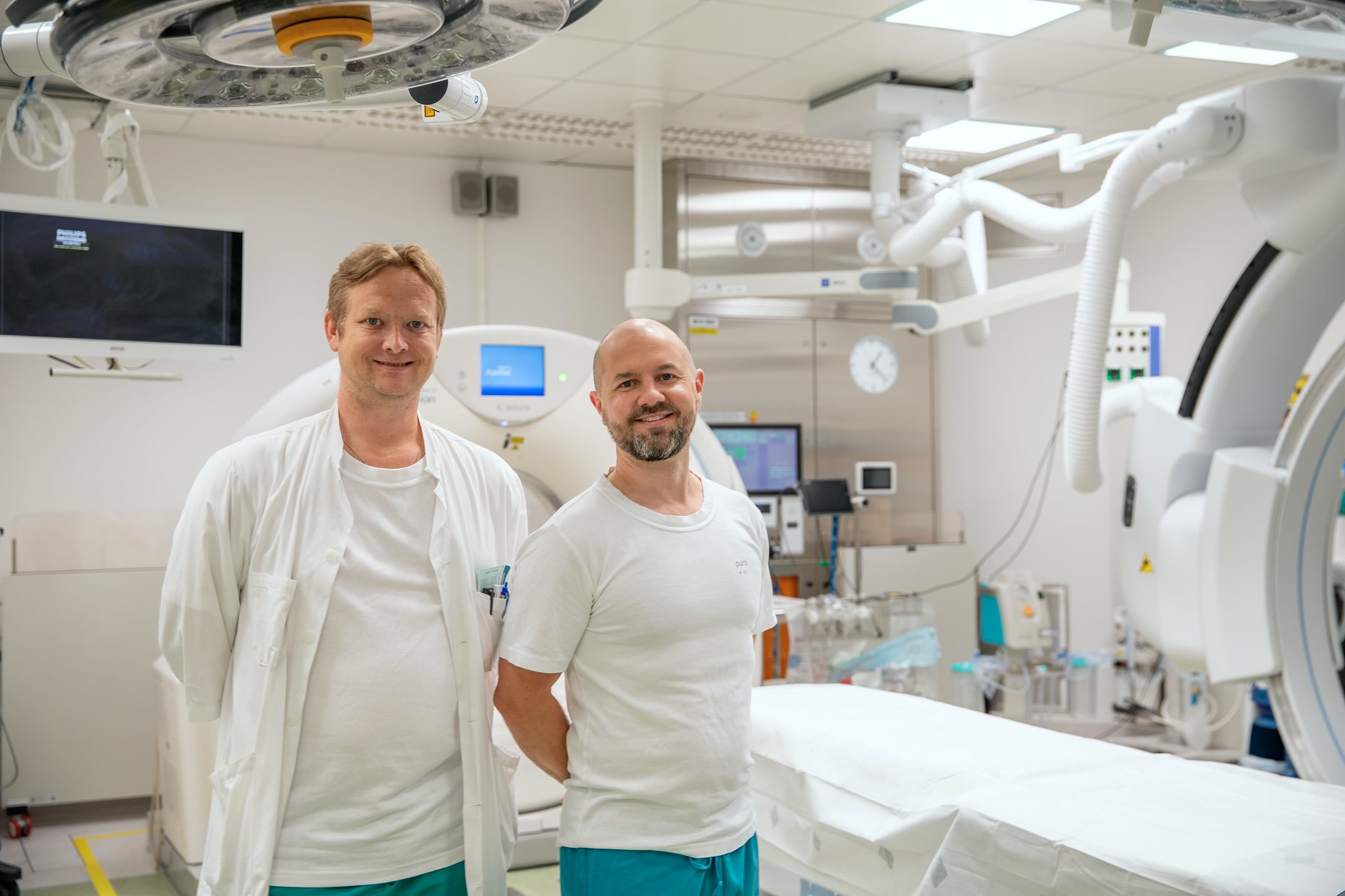
For decades, surgeons have fused the big toe's base joint to treat hallux rigidus — painful arthritis of the first metatarsophalangeal joint (MTPJ) — without a single randomized, controlled trial testing whether that surgery actually beats doing nothing. The HARD trial, published this month in Annals of Internal Medicine, is the first to find out. The answer: fusion surgery wins, decisively.
The trial carries strong FICEBO involvement: senior author Lasse Rämö and co-author Tuomas Lähdeoja are both core members of FICEBO, the Finnish Centre for Evidence-Based Orthopaedics — the group behind trials like FIDELITY and FIMPACT, which found two of the world's most common orthopaedic surgeries no better than sham surgery or exercise. HARD flips that script. "Many of our trials have found that surgery doesn't add much over the alternative — that's almost become the expected result," said Dr. Rämö. "HARD is a reminder that we run these trials to find the truth, not to prove a point. This time, surgery came out clearly ahead."
Hallux rigidus affects up to 8% of adults over 50, yet treatment has rested almost entirely on observational studies and surgeon experience. "Arthrodesis has been the presumed gold standard for a long time, but presumed is not the same as proven," said Dr. Mikko Miettinen, the trial's PI at Helsinki University Hospital. "Nobody had actually compared it against just watching and waiting."
Instead of exploring effectivieness of surgery, HARD almost became yet another trial comparing different treatments. But a discussion initiated in the coffee room of the hospital ER during an on-call led to evolution of the trial to address the most important evidence gap – is surgery better than no surgery?
At the Foot and Ankle Unit of Helsinki University Hospital, 90 adults aged 40 years or older with symptomatic hallux rigidus were randomly assigned in a 1:1 ratio to arthrodesis (fusing the joint with a plate and screws) or watchful waiting (an information leaflet, footwear advice, and analgesics as needed). At 12 months, walking-related pain had dropped from a baseline of roughly 6/10 to just 1.3 in the surgery group, while the watchful-waiting group barely moved, at 5.7 — a gap nearly three times larger than the threshold set in advance as clinically meaningful.
"We expected surgery to help, but the size of the difference still surprised us," said Timo Sirola, the study's surgeon member. "Most patients went from struggling to walk comfortably to essentially forgetting they ever had a problem."
The pattern held across nearly every outcome — pain at rest, function, quality of life, painkiller use — with no serious complications in either group. Tellingly, 64% of patients originally assigned to watchful waiting had asked for surgery by the 12-month mark. "That crossover number tells its own story," Miettinen said. "When people are living with this day to day, most eventually vote with their feet."

What this means for patients
The results won't apply to everyone — the trial excluded rheumatoid arthritis, poorly controlled diabetes, and significant hallux valgus, and was run at a single high-volume center by experienced surgeons. But for midlife and older adults with persistent, disabling big-toe pain, the message now rests on trial-level evidence rather than tradition. "This is the evidence patients and clinicians have been missing," Miettinen said. "It doesn't mean everyone with a bit of stiffness needs surgery — but for people who've had significant pain for a year or more, we can now say with real confidence that fusion is likely to help far more than waiting will."
For a group better known for showing that popular surgeries don't outperform doing nothing, HARD lands as something of a plot twist. "If we only ran trials when we expected surgery to fail, that wouldn't be science," Rämö said. "Here, watchful waiting simply didn't help these patients, and surgery clearly did — the trial told us what the data showed, not what our track record might have predicted."
The HARD trial was funded by the Finnish Medical Foundation and was published in Annals of Internal Medicine.



Stay up to date
Follow FICEBO on social media to stay in the loop with our latest updates.
